When Should You Hire A Tilt Tray? 6 Common Situations
Knowing when tilt tray hire is the right option can save you time, money and the risk of damaging valuable equipment. Some transport jobs are straightforward. Others require a solution that can safely load, carry and unload vehicles or equipment that cannot move under their own power, will not fit on a standard trailer or need to be shifted without the damage risk that comes from pushing the job to the wrong equipment. Here are six real-world situations where calling a tilt tray is the smarter move.
1. A Broken-Down or Non-Running Vehicle
This is the most common reason people call a tilt tray in Tamworth and across regional NSW. A car, ute, van or 4WD that will not start, has a seized engine, has been in an accident or simply will not roll is exactly what a tilt tray is built for. The tray tilts to ground level, the vehicle is winched or driven onto it and secured, and that is the end of the loading problem.
Alternatives like a conventional tow truck work for some breakdowns, but they put stress on the steering, suspension and transmission of the towed vehicle. If the wheels do not turn freely, if the steering is locked or if the vehicle has sustained underbody damage, towing it on its wheels is the wrong call. A tilt tray keeps all four wheels off the road for the entire trip.
2. Moving Small Machinery Between Sites
Tradies and small business owners regularly need to shift equipment between job sites or back to the yard at the end of a project. A mini excavator, a plate compactor, a concrete saw or a small bobcat does not have number plates and cannot travel between sites under its own power on public roads.
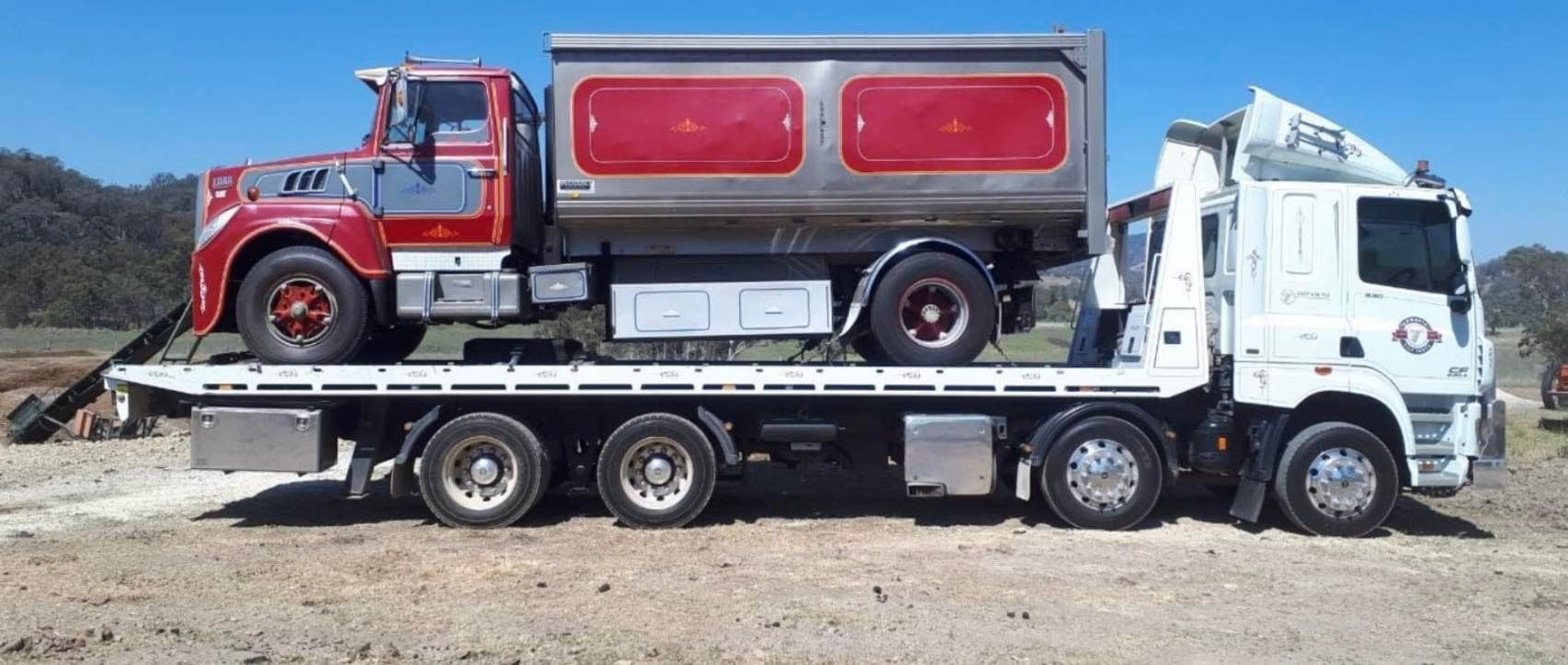
A tilt tray handles this cleanly. The machine is loaded onto the tray at the originating site and unloaded at the destination. There is no need to organise a separate low loader or trailer for a machine that fits comfortably within a standard tilt tray's capacity. For larger machines, our
machinery transport service handles excavators, loaders and bobcats that go beyond tilt tray capacity.
3. Relocating a Site Shed or Container
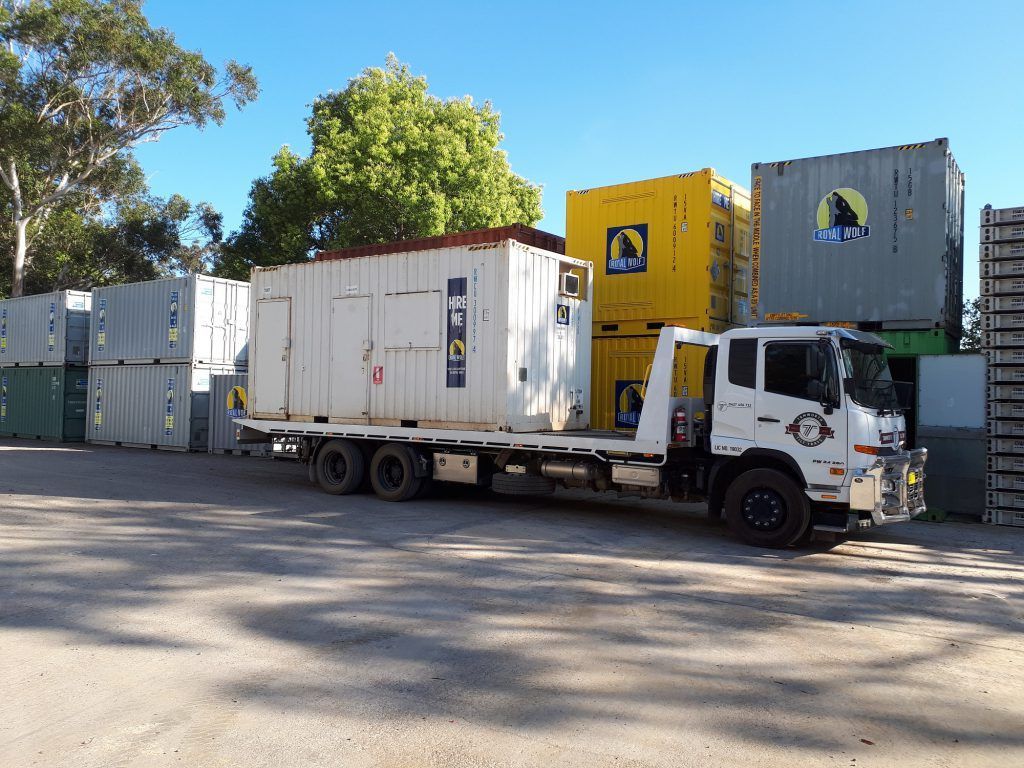
Site sheds and small shipping containers regularly need to move as projects progress or wrap up. They are too heavy to move by hand, too awkward for a standard ute or trailer and usually positioned in exactly the kind of tight space that makes a crane or forklift impractical.
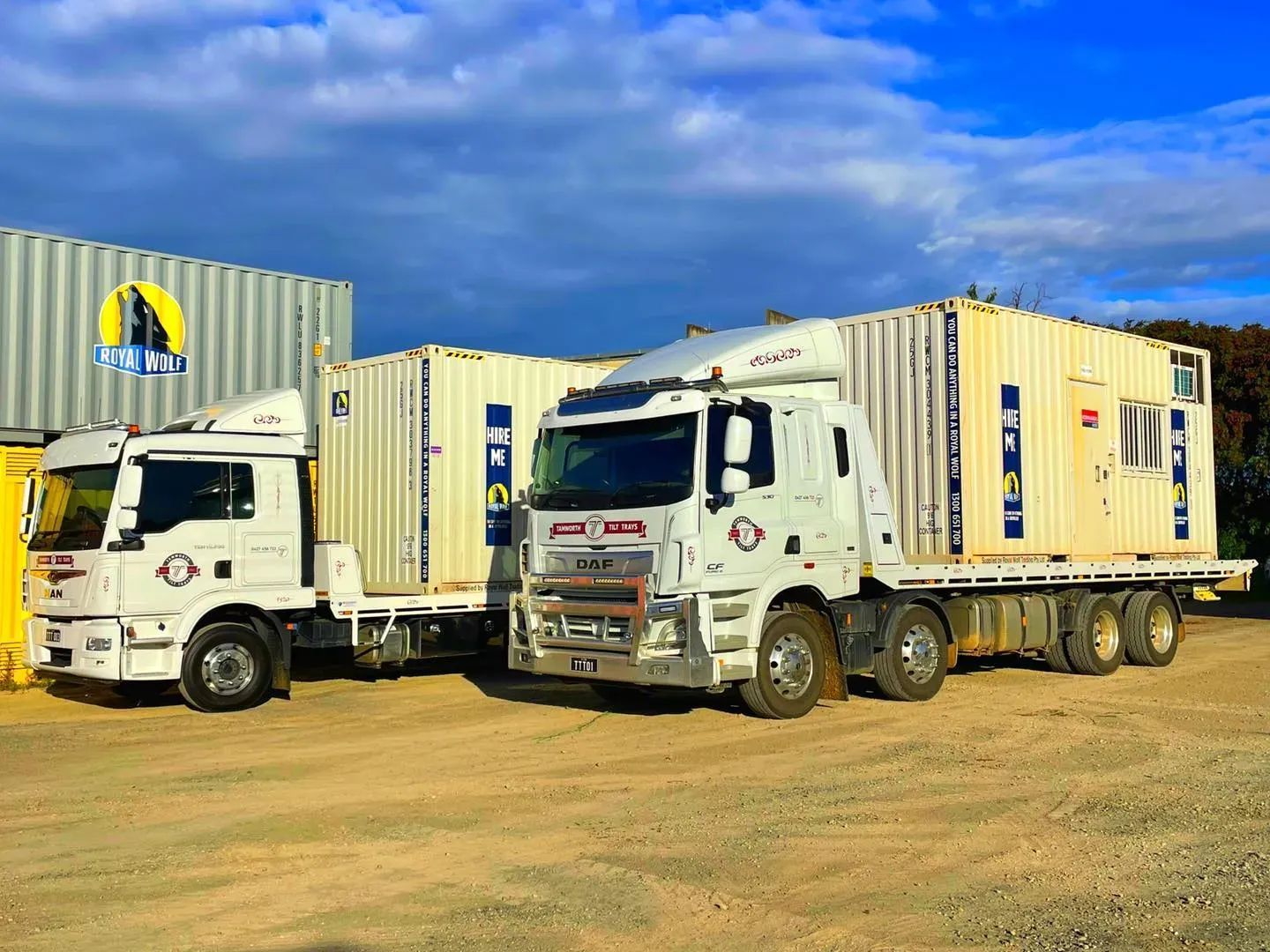
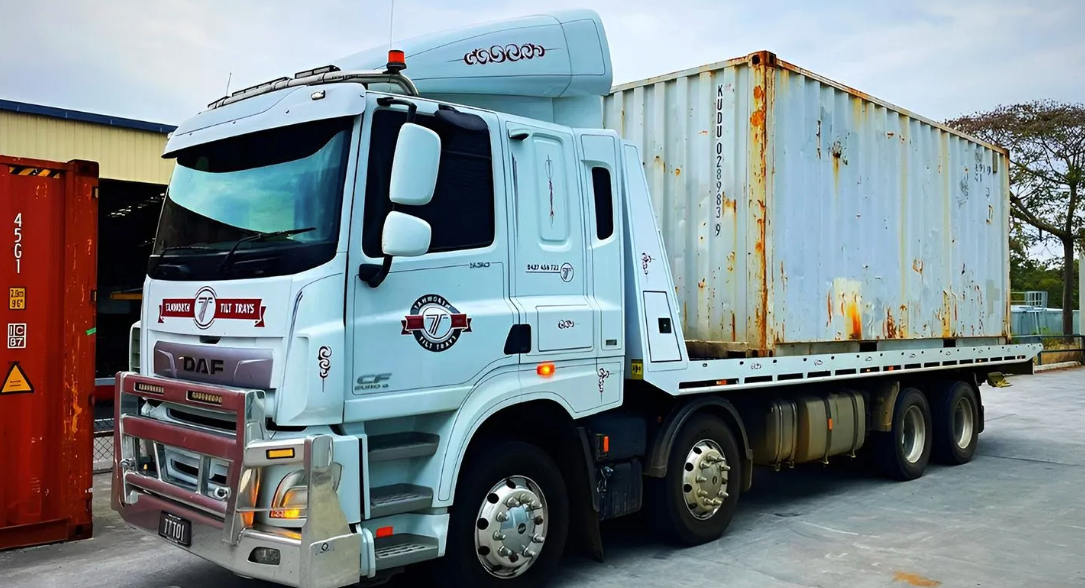
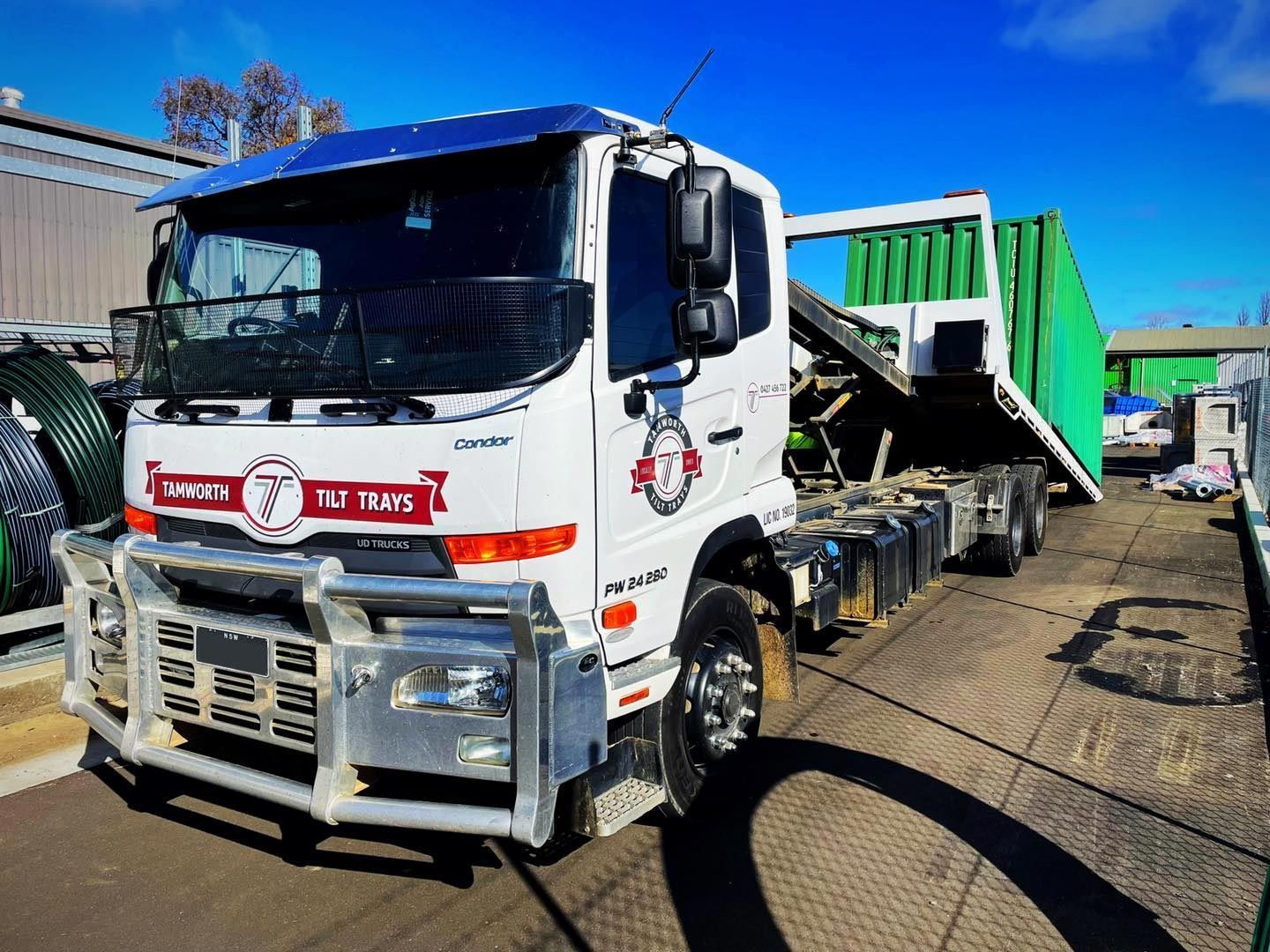
A tilt tray with the right capacity can slide under the shed or container, lift it cleanly and transport it to the new location. This is a job where getting the transport choice wrong can result in a damaged shed, a damaged site or a vehicle that is not rated for the load. Getting a tilt tray operator who handles this type of move regularly takes the guesswork out of it.
4. Transporting Farm Equipment
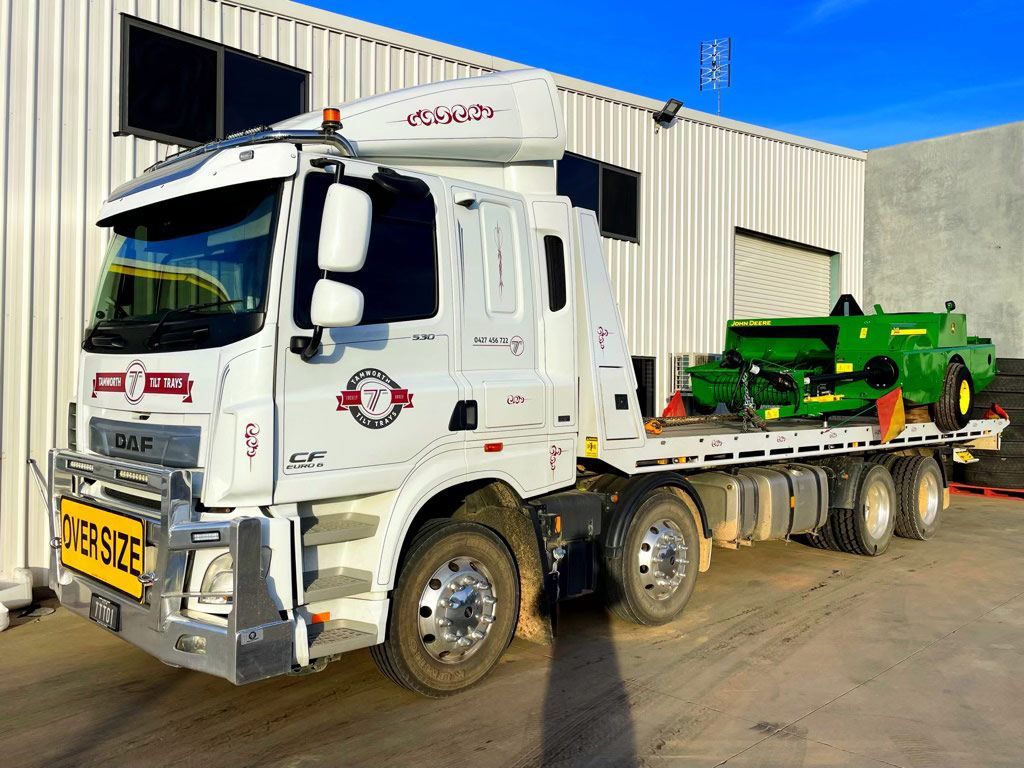
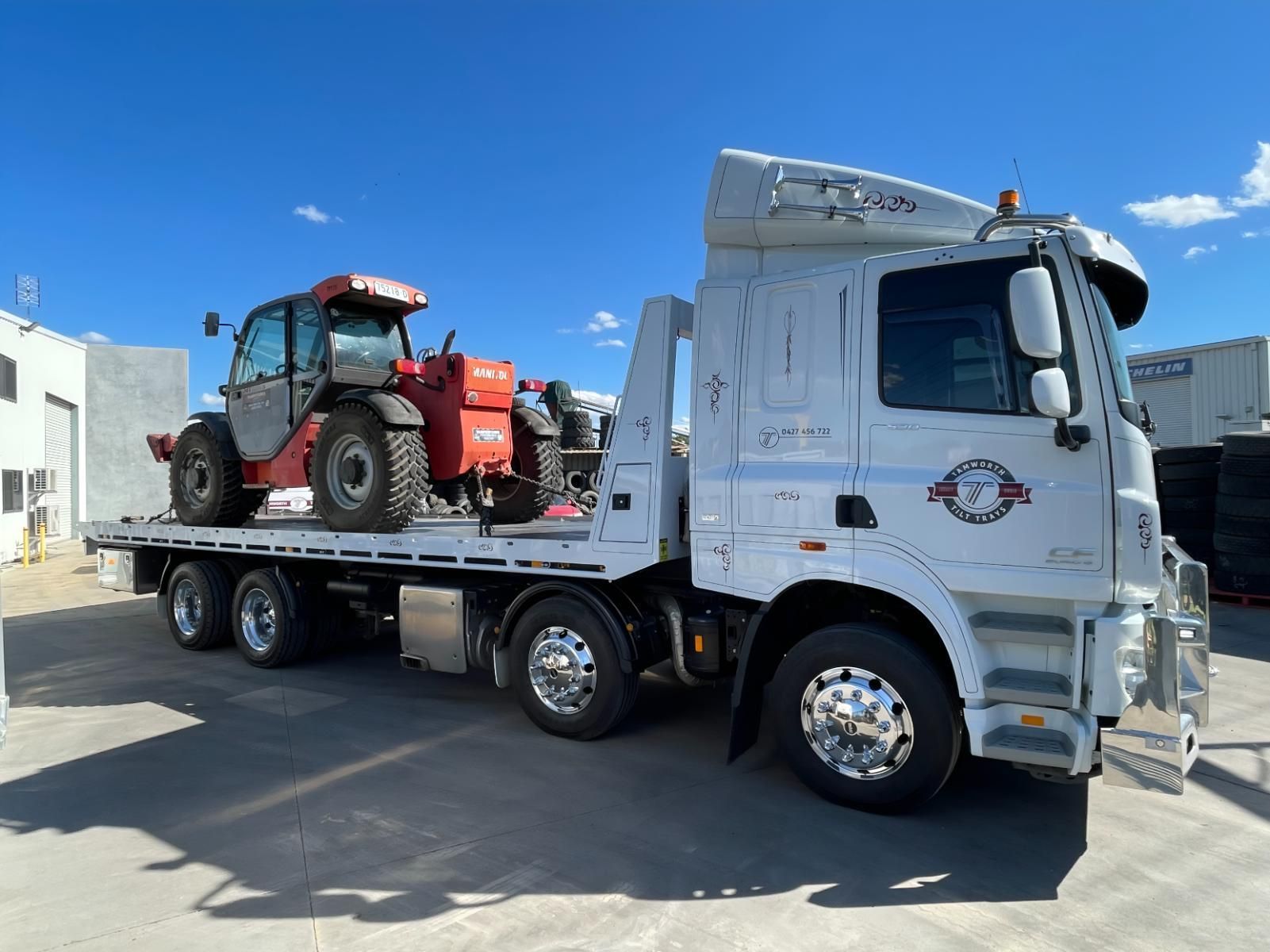
Moving agricultural equipment between paddocks or across to a different property is a regular logistical challenge for farmers across the Tamworth region. A header, a spray unit, a bale feeder or a large ride-on mower often cannot travel on public roads without being loaded for transport. Farmers often rely on agricultural transport to relocate tractors and harvesters across properties, and the same principle applies to smaller farm equipment that exceeds the capacity of a standard trailer.
The specific advantage of a tilt tray in agricultural settings is the ability to load machinery that may not be running or may be awkwardly positioned on uneven ground. The tilt mechanism and winch capability give the operator options that a flat tray or standard trailer does not.
5. Moving a Forklift or Scissor Lift
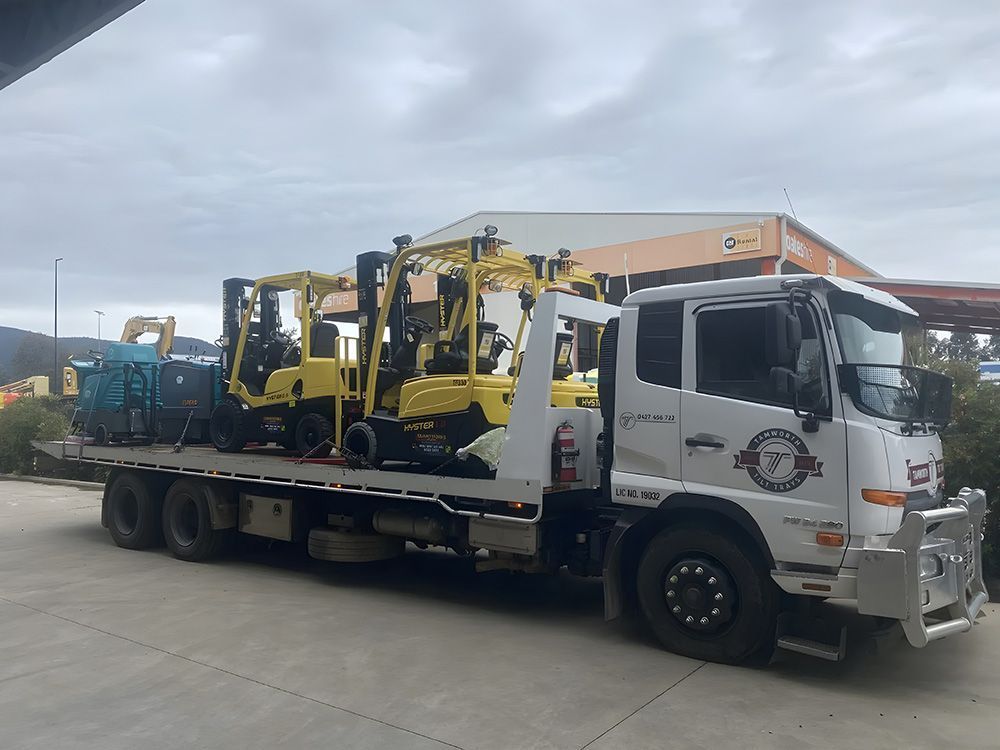
Forklifts and scissor lifts are heavy, they travel slowly, they are not road-registered and they need to be at the job site before they can be useful. Moving a forklift from one business address to another, or picking one up from a hire company and delivering it to a site, is a tilt tray job.
The same applies to boom lifts, order pickers and other elevated work platform equipment. These machines are designed for their specific tasks, not for loading themselves onto transport under difficult conditions. A tilt tray operator handles this type of equipment regularly and knows how to load, secure and deliver it without incident.
6. Recovering a 4WD or Ute
A 4WD that has gone off the track, a ute that has slid into a ditch or a vehicle that is stuck in a position where it cannot reverse out under its own power is a recovery job. Depending on where the vehicle is and how it got there, a tilt tray may be the most practical way to extract and transport it once it has been safely recovered to a position where loading is possible.
In regional NSW, this situation comes up more often than people expect. Farm tracks, fire trails, river crossings and outback roads all present conditions where a vehicle ends up somewhere it should not be. A tilt tray with winch capability can load a vehicle that is sitting at an angle, has sustained underbody damage or has locked wheels that will not roll freely.
Not Sure If a Tilt Tray Is Right for Your Job?
Tilt tray hire is the right answer more often than people initially think. If what needs to be moved cannot roll freely, does not have road registration, is too heavy for a standard trailer or needs to be kept off the ground during transport, a tilt tray is almost always the safest and most practical option.
Call the
Tamworth Tilt Trays team to talk through your situation before you try to work around the wrong equipment for the job.