Shipping Container Sizes & Dimensions: Which One Do You Need?
Shipping container sizes are the first thing to get right before you hire or buy. Choose too small and you are back to square one before the job is done. Choose too large and you are paying for space you do not need and potentially running into delivery access issues on site. Understanding the standard sizes, what their internal dimensions actually mean in practice, and which use cases each size suits best will save you time and money before you make a decision. Understanding shipping container sizes is the first step before choosing from the shipping containers Tamworth locals hire and buy — and this guide covers everything you need to know.
The Three Standard Sizes
Shipping containers are manufactured to standardised dimensions that make them stackable, intermodal and broadly compatible with transport and handling equipment worldwide. In Australia, the three sizes you will most commonly encounter for hire and sale are the 10ft, 20ft and 40ft containers.
10ft Shipping Container
The 10ft container is the smallest of the standard options and suits situations where space is limited or storage needs are modest.
- External dimensions (approximate): Length 3.0m | Width 2.4m | Height 2.6m
- Internal dimensions (approximate): Length 2.85m | Width 2.35m | Height 2.39m
- Door opening (approximate): Width 2.34m | Height 2.28m
- Internal floor area: approximately 6.7m² | Internal volume: approximately 16m³
The 10ft container is a practical choice for tight sites, residential properties with limited space, or situations where a smaller footprint is a priority. It suits light general storage, tools, materials or small equipment. Delivery access is the most straightforward of the three sizes — a standard truck can deliver a 10ft container in most suburban and rural locations without special routing.
20ft Shipping Container
The 20ft container is the most commonly hired and sold size in Australia. It hits a practical sweet spot between storage capacity and site access requirements, making it the default choice for most storage and site applications.
- External dimensions (approximate): Length 6.1m | Width 2.4m | Height 2.6m
- Internal dimensions (approximate): Length 5.9m | Width 2.35m | Height 2.39m
- Door opening (approximate): Width 2.34m | Height 2.28m
- Internal floor area: approximately 13.9m² | Internal volume: approximately 33m³
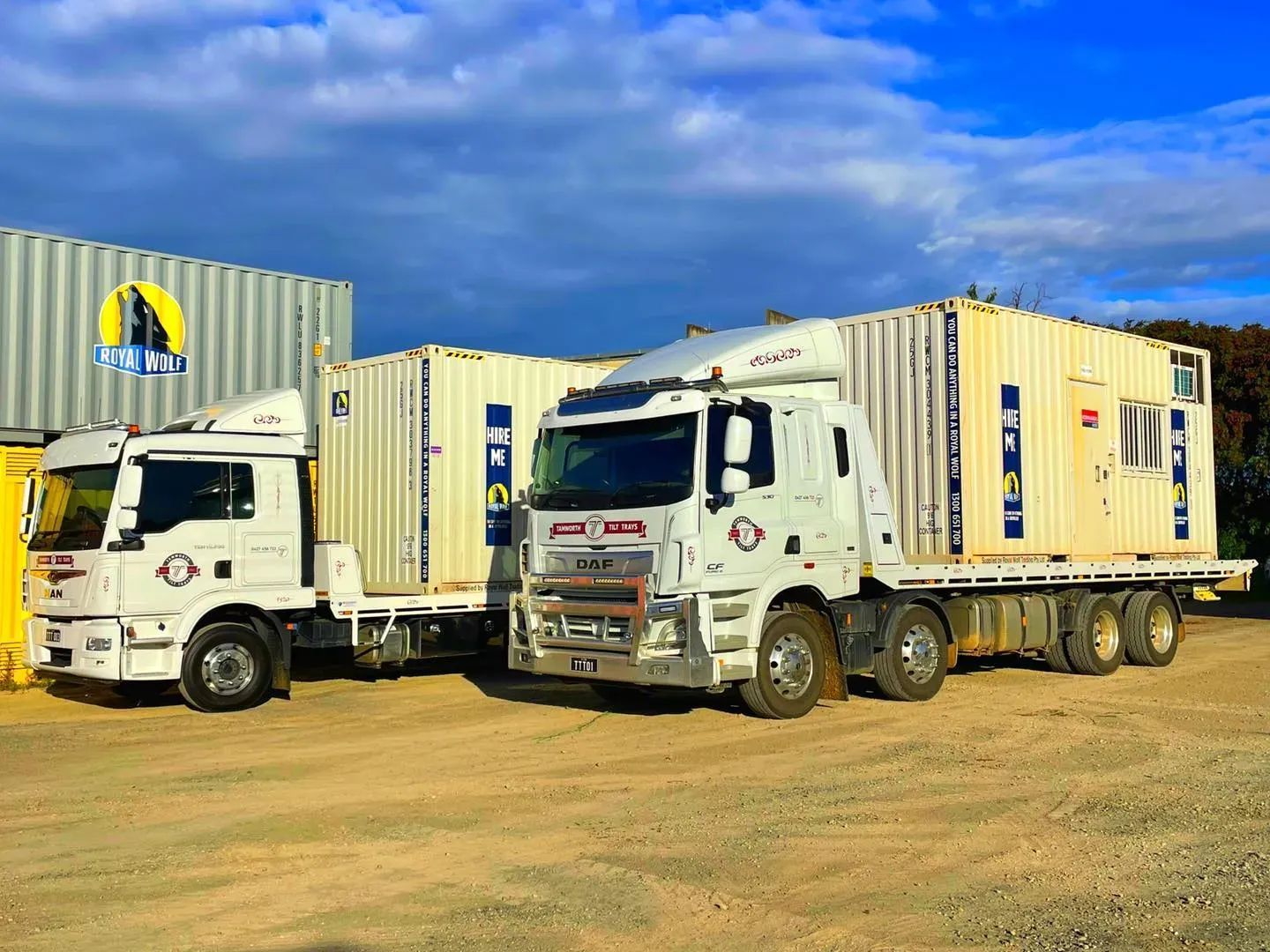
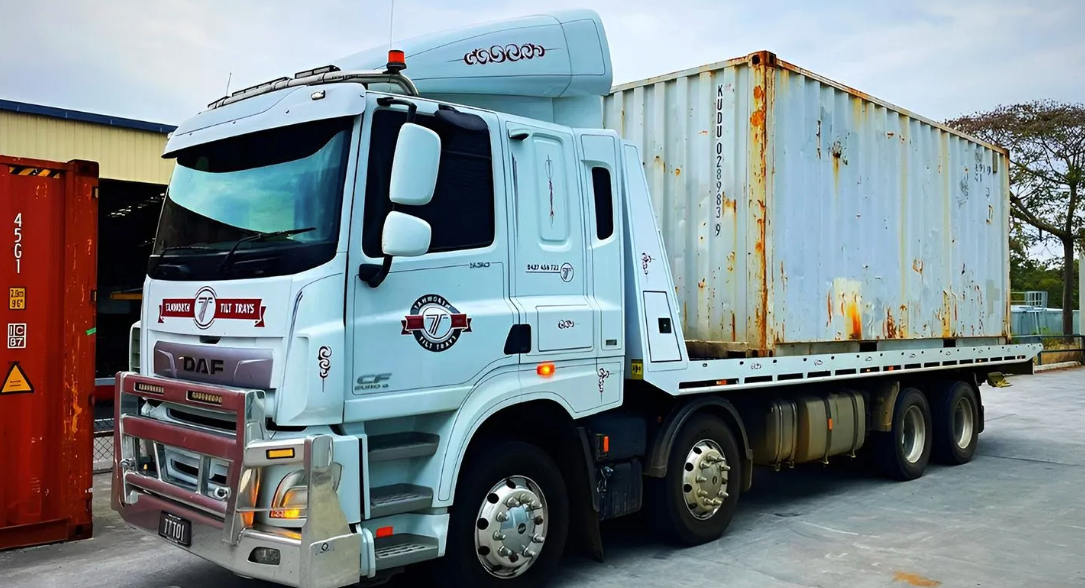
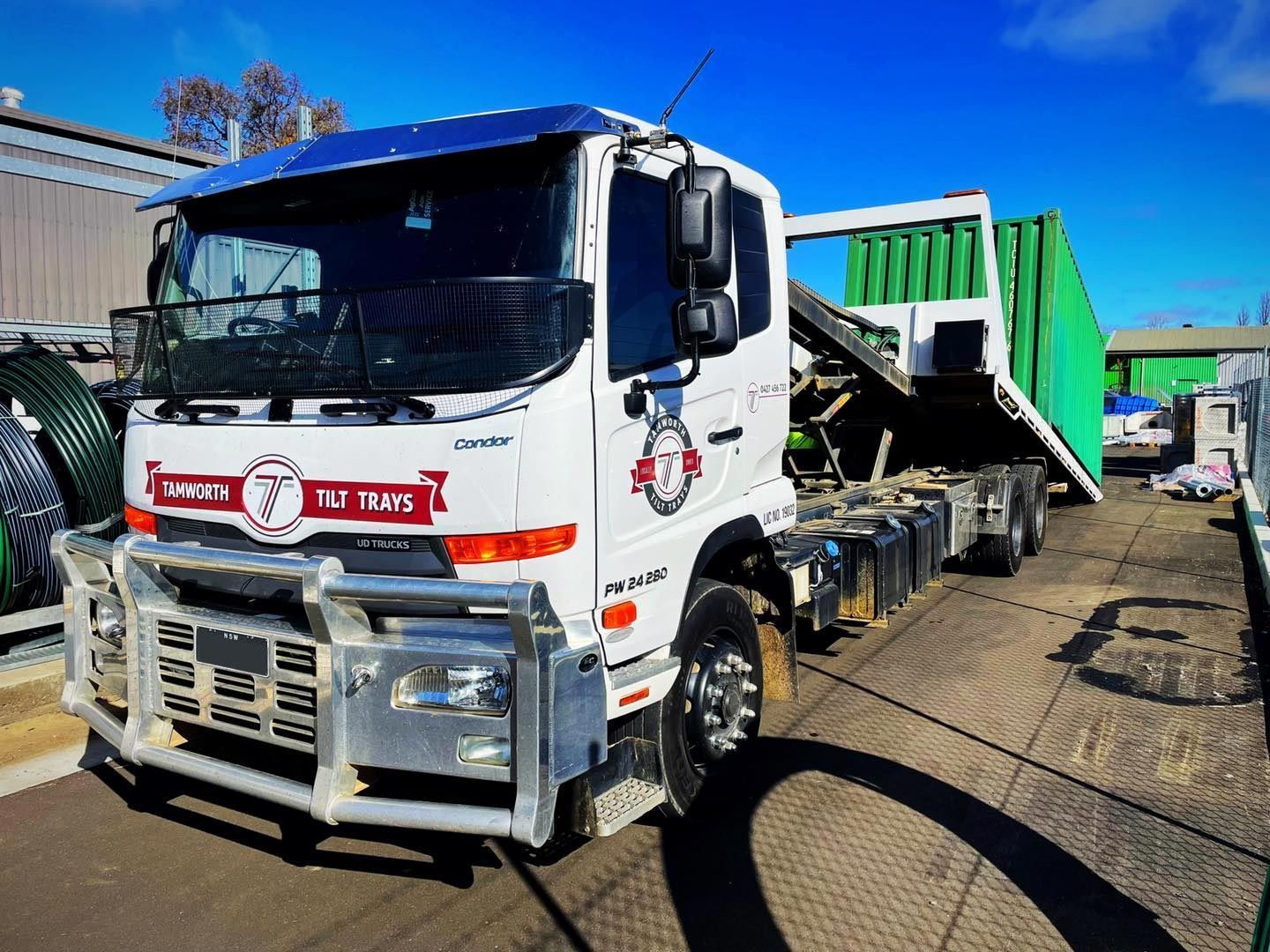
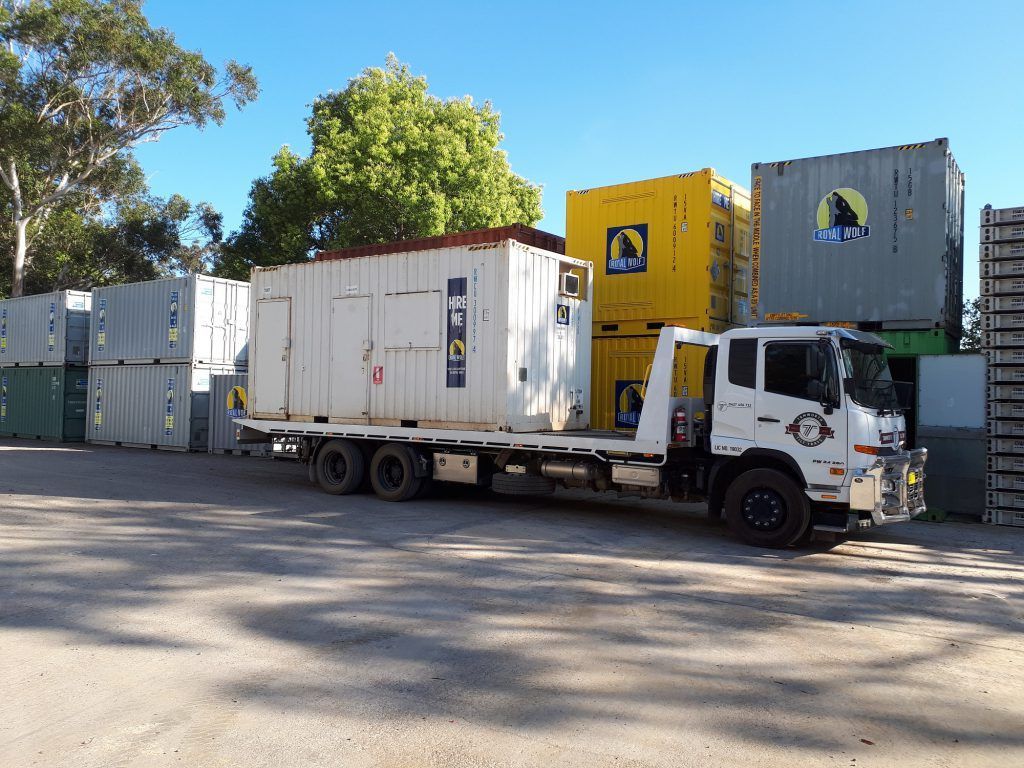
A 20ft shipping container provides enough floor space for most small to medium storage requirements — a full household contents, a workshop's worth of tools and equipment, or farm supplies and machinery components. The door opening is wide enough for most pallet loads and ride-on equipment. Delivery requires a truck with a tilt tray or crane capability, and the site needs a clear run of approximately 10–12 metres for the container to be placed.
40ft Shipping Container
The 40ft container provides the largest standard storage footprint and suits applications where significant volume is needed — large site storage, extended farm use, or situations where multiple 20ft containers would otherwise be required.
- External dimensions (approximate): Length 12.2m | Width 2.4m | Height 2.6m
- Internal dimensions (approximate): Length 12.0m | Width 2.35m | Height 2.39m
- Door opening (approximate): Width 2.34m | Height 2.28m
- Internal floor area: approximately 28.2m² | Internal volume: approximately 67m³
A 40ft container is roughly double the storage capacity of a 20ft. It suits large machinery storage, extensive stock or materials storage, converted site offices, or where a single container needs to serve multiple functions. Site access planning is more important for a 40ft — a clear run of approximately 18–20 metres is needed, and the delivery truck requires an unobstructed approach. Larger 40ft units need careful planning, which is where professional shipping container transport makes delivery straightforward.
Standard vs High Cube: When the Extra Height Matters
Standard containers have an internal height of approximately 2.39m, which suits most storage applications comfortably. High cube containers add approximately 30cm of additional height, giving an internal clearance of around 2.70m.
A high cube shipping container is worth considering when:
- You are storing tall equipment or machinery that sits close to the 2.4m internal height of a standard container
- You are converting the container into a site office, workshop or accommodation, where the extra headroom significantly improves comfort and usability
- You are stacking racking or shelving inside the container and want maximum vertical storage capacity
- You are installing internal fittings, insulation or suspended lighting that would reduce effective clearance in a standard unit
High cube containers are available in both 20ft and 40ft lengths. They are slightly taller externally — approximately 2.9m — which is worth factoring in when planning overhead clearance on site.
Matching Container Size to Use Case
Residential and household storage
A 20ft container handles the contents of a typical three or four bedroom home comfortably. A 10ft suits a unit, apartment or smaller household where a compact footprint is preferable.
Building and construction sites
A 20ft container suits most site storage requirements for tools, materials, safety equipment and site documents. A 40ft is appropriate for larger projects or where a dedicated site office is needed alongside storage.
Farm and agricultural use
Farms typically benefit from 20ft or 40ft containers depending on the equipment and supplies being stored. Fencing gear, chemicals, seed and small machinery components suit a 20ft.
A 40ft suits larger equipment storage or where the container serves as a permanent on-farm storage solution.
Shipping container for sale NSW buyers considering conversion
Whether for a workshop, office, studio or accommodation, conversions generally benefit from a high cube option for the additional headroom. A 20ft high cube is the most common starting point for smaller conversion projects, while 40ft high cube units are preferred for larger or multi-use conversions.
Site Access: What You Need for Each Size
Delivery of a shipping container requires adequate site access for the transport vehicle. As a general guide:
- 10ft container: Minimum clear run of approximately 8–10m. Manageable in most suburban driveways and smaller rural properties
- 20ft container: Minimum clear run of approximately 10–12m. Requires a firm, reasonably level surface and clear overhead access
- 40ft container: Minimum clear run of approximately 18–20m. Requires more planning and a clear, wide approach for the delivery vehicle
For remote rural properties, steep grades or sites with overhead obstacles such as power lines, it is worth discussing access requirements before booking delivery. Providing photos of the delivery site helps the team assess what is possible and whether any additional planning is needed.
Shipping container sizes determine not just what you can store, but what delivery is practical for your site. At
Tamworth Tilt Trays, we supply and deliver shipping containers Tamworth and regional NSW wide — with containers available to hire or buy and a buy-back program for when you no longer need them. To
discuss which size suits your situation, visit our website or
call us on (02) 6762 7399.